Search This Blog

Monday, January 23, 2012

Chapter 28 David Chun and Chae Lee


The Street View of NY [1900s]


The Fire House is in the background, and this is the street view.
The Fire house has a big entrance and a large space that could store a horse and a fire engine.


Fire Fighters in NY [1900s]


The fire fighters in NY, early 1900s.
A man attacked the six fire fighters in chapter 28.


The Luger Po8 [1900 model.]


Father took his gun out of the drawer after he notices the explosion. This Luger is used in American Navy forces, and America bought 1000 of this model. This is the early version of Luger, the legendary pistol.


Car [1902 model]


When Coalhouse is involved with the fireman's explosion incident, he demands his justice, and wants to call Fire Chief of the Volunteers. This is the image of a car in early 1900s. He might have rode similar design and concept.


Steam Engine Car [1900s]

The Steam Engine that was used in the early 1900s.
It makes its appearance in chapter 28, during the incident when the firemans were shot. This steam engine car works like a miniature steam-engine train, and unfortunately the accident killed one of the fireman.

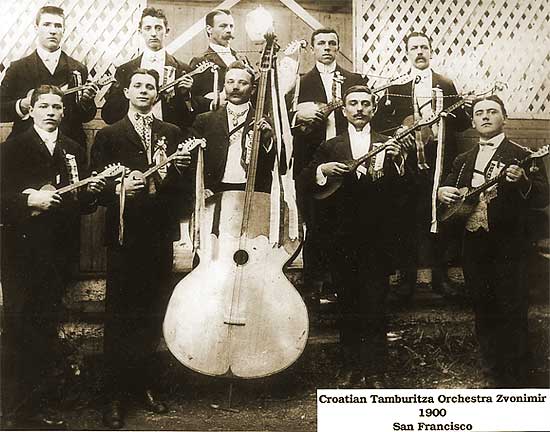
Music of the Era (1900's) by Juan Luis and Clara

The 1910s were called the Ballroom Decade. Many of the trendier restaurants were equipped with dance floors. Black Americans continued to write and perform ragtime, blues and jazz. Popular songs of the decade (many made popular because of WWI) included Alexander's Ragtime Band (Irving Berlin), Danny Boy, You Made Me Love You (Al Jolson), Ah! Sweet Mystery of Life, The Aba Daba Honeymoon, and All I Do is Dream of You.War songs


Chapter 32 by Juan Luis and Clara


Harlem Cementery


Harlem Funeral Parlor


Manhattan Casino


Bilt in 1925, the Manhattan Casino is significant for its contribution to entertainment and the culture in the African American community for more than forty years. Some of American music's most legendary performers played at the Manhattan. After the era of the big bands, the Manhattan Casino hosted dances featuring local artists; rock and roll and blues singers popular in the 1960's.


James (Jim) Reese Europe
Born the 22 of February of 1881 and he died on 9 May of 1919. Jim was an American ragtime and early jazz bandleader, arranger, andcomposer. He was the leading figure on the African American music scene of New York City in the 1910s.


Harlem's Streets


Blackface


Black face was originally used by white actors to perform as black people. This was consider fine back in the day although it is clearly a sign of racism in today’s world.


Chapter 24

"He bought a Colombia bicycle and rode it to work" (pg. 182)
Columbia bicycle:
A bicycle that was created by the first manufacturer of bicycles,
the Colombia Manufacturing Inc., around 1900's.

--------------------------------------------------------------

"...he would do calisthenics until he was exhausted." (pg.182)
Calisthenics: A form of aerobic exercises consisting of a variety of simple rhythmical
movements. They are intended to increase body strength and flexibility with
movements using only one's body for resistance.


--------------------------------------------------------------

"Mother did ask him to join them in the parlor after dinner..." (pg. 182)
Parlor: In a private home, a parlor is a formal room set aside for the entertainment of guests to the home.


--------------------------------------------------------------

"He saw them in their suffocating parlor with its chaise and its mounted heads..." (pg. 182)
Chaise: An upholstered sofa in the shape of a chair that is long enough to support the legs.


--------------------------------------------------------------

"...lapping of the water against the front fenders of the Model T." (pg. 182)
Model T: An automobile that was produced by Henry Ford's Ford Motor Company. It is generally
regarded as the first affordable automobile,
the car that opened travel to the common middle-class American.


--------------------------------------------------------------

"...admired Scott Joplin and other St. Louis musicians..." (pg. 183)

Scott Joplin: An African-American composer and pianist. Joplin achieved fame for his ragtime
compositions, and was later dubbed "The King of Ragtime".
One of his first pieces, the
Maple Leaf Rag became ragtime's first
and most influential hit.


--------------------------------------------------------------

"...had paid for his piano studies with money he earned as a stevedore." (pg. 183)
Stevedore: One who works at, or is responsible for, loading and unloading ships at a port.


--------------------------------------------------------------

"His monumental negritude sat in front of them like a centerpiece on a table." (pg. 186)
Negritude: A consciousness of, and pride in, the cultural and physical aspects of African heritage.


--------------------------------------------------------------

"...warm breeze blew the window curtain open in the Egyptian dining room." (pg. 186)
Egyptian dining room: An Egyptian dining room's main characteristic is a long table that is made out of
wood in the center and had chairs all along it.


--------------------------------------------------------------

"Sarah dropped a serving tray of filet of sole." (pg. 186)
Filet of sole: The piece of meat (from a fish) that is cut from the bones in order to be consumed.
Depending on the size of the fish, a filet of sole can be for one person or can feed several.


Chapter 21 by Juan Luis and Clara

Louis Quatorze


Louis XIV 5 September 1638 – 11 September 1715, also known as “Louis the Great” or “Sun King."


Nubia


Region along the Nile River of Egypt. Ancient Nubians were famous for their enormous wealth.


Model T Ford


It was produced by Henry Ford from September 1908 to May 1927. It was the first affordable automobile which opened up traveling to common middle-class Americans. First time which assembly line was used to create an automobile.


Norwegian Mapple


Wicker Carriage


Coalhouse Walker Jr.


Fictionary character, no real life relation can be found.


Chrysanthemums


Flower native to Asia and northeastern Europe. Meaning: Slighted love.

Booker T. Washington


April 5, 1856 – November 14, 1915. He was an American educator, author, orator, and political leader.-He was invited to White house from Mr. Roosevelt for a tea by his achievements and actions he took for equality of African Americans.


(to the left)


Scott Joplin

1867 – April 1, 1917 American composer and pianist. Achieved fame for his ragtime works, he composed 44 original ragtime pieces and one ragtime ballet.


Carrie Minetta Jacobs-Bond


She was an American singer, pianist, and songwriter. She composed 175 pieces of popular musics during ragtime.


Coon Songs
Genre of music, it was popular around 1880 to 1920. Delivered a racist and stereotyped images of African-Americans.


Mathew Henson


August 8, 1866 – March 9, 1955. An African-American explorer.-Famous for being a possibly the first person who reached the North Pole. Henson's polar expeditions was part of this book Ragtime.


Sunday, January 22, 2012

Chapter 13

"There were long distance locomotive railroads and interurban electric railroads..." (pg. 96)
Interurban Electric Railroads: Railroads which operated a system of interurban trains.
Interurban trains were like a blend of streetcars and trains.
(Kinda looked like trolle
ys)

--------------------------------------------------------------

"Sandhogs working behind a hydraulic shield excavated..." (pg. 96)
Sandhogs:
A slang term given to urban miners/construction workers who would work underground.
These men would be in charge of building subway systems and all that good stuff.
Truly danger
ous job.

Hydraulic shield: A sort of tunnel that protected the workers when building a tunnel through
soil that is too soft or loose. The tunnel shield acts as the support for the soil itself.


--------------------------------------------------------------
"Chutes of cheerful morning sun leaned like buttresses..." (pg. 97)
Buttress:
An architectural (are-ki-tec-chur-ul) structure that is built against a wall in order to reinforce it.


--------------------------------------------------------------

"...a wife, an old mother in a babushka, two strapping sons..." (pg. 97)
Babushka:
A woman's headscarf tied beneath the chin.
Old Eastern European woman sure loved wearing these scarves.


--------------------------------------------------------------
"without expression on their stolid Slavic faces..." (pg. 97)
Slavic:
A group of ethnicities came together to create a panethnicity and were named the Slavic people.
These people mainly reside in Eastern Europe, Southern Europe, and some parts of Northern Asia.
Like I said, many ethnicities into one.


--------------------------------------------------------------
"He wore a tight-fitting double-breasted linen jacket..." (pg. 98)
Double-breasted jacket: A jacket which is mainly worn buttoned up since it looks fancier when its
two rows of buttons are being shown. One row actually serves as buttons.
The other
row is just for show.

--------------------------------------------------------------

"He was incredibly lithe." (pg. 99)
Lithe
(adj): thin, felixible, supple

--------------------------------------------------------------

"...when he had been unable to crack the big-time vaudeville circuits..." (pg. 99)
Vaudevil
le: A type of theatrical act that included several types of entertainment in one show.
--------------------------------------------------------------
"...was to sail for Europe on the Imperator, an immense German vessel with a figurehead..." (pg. 100)
Imperator: This ship actually existed. Pay attention to the figure head though. Under the eagle's talons are the words 'Mein Feld ist die Welt',
which means 'My field is the world'. This phrase can be tied to the future Word War 1.
A war which Germany was heavily involved in.

--------------------------------------------------------------
"..attended he public demonstration of a French-made flying machine, a Voison..." (pg. 101)
Voison biplane:
Made by an engineer/manufacturer called Gabriel Voison. First flown by Henri Farman.
The fact that it has two main wings makes it a biplane.


--------------------------------------------------------------

"His German was faulty and Yiddish-inflected..." (pg. 104)
Yiddish:
A language that can be traced back to Germany even though it has Jewish origins.

Not to be confused with "gibberish".


--------------------------------------------------------------

"next to the driver was an enlisted man who wore the spiked helmet and held a carbine..." (pg. 104)
Spiked helmet:
Called a Pickelhaube (pickel = point; haube = bonnet). Used by German soldiers.
The spike was to be used as a weapon when the soldiers ran out of ammunition. Just kidding.

--------------------------------------------------------------
"At this moment a white Daimler landau with an enclosed carriage..." (pg. 104)
Daimler landau:
A really bougie looking carriage/early form of a car. A landaulet was an enclosed
carriage with a top that could be folded down. The first convertibles of the time.


--------------------------------------------------------------

"Sitting in the car was the Archduke Franz Ferdinand, heir to the Austro-Hungarian throne." (pg. 105)


Archduke Franz Ferdinand: The man destined to rule Austria-Hungary (Austria and Hungary were in a monarchic union). The archduke was off visiting Bosnia due to riots and supposed revolutionary activity occurring in the area. There had been talk that Bosnia wanted to break away from the Austrian-Hungarian rule. The archduke, being the heir and all, decided to visit.
He was shot and killed by a man named Gavrilo Princip and this assassination set off a chain of events that eventually began World War 1. And no, Harry Houdini had no knowledge off this.


Chapter 17

Cloak is an overcoat-like loose garment that is usually worn over indoor clothing. It keeps the person warm.


Toque is a cylinder-like hat. Toques from the 1900s usually have feathers. They were worn by rich, fancy women.


This movement in ballet or jazz is called pirouette.


I.W.W - (Industrial Workers of the World)- was an international union between industrial workers fighting for more rights such as abolishing the wage system and wanted workplace democracy where they get to choose their managers and such by majority of the votes.